
By Oxford Orthopaedics

You push through a morning run, complete a strength session, or finish a friendly game of futsal or pickleball, and an ache begins to settle around your knee. With Singapore being a highly urbanised island state, daily movement often includes long walks between buildings, regular stair use, and hours on firm surfaces. As these routine demands build on top of your training load, the knee absorbs more stress than expected, so an ache that first appeared only after intense workouts might gradually begin to surface during warmups and even during slower walks on days meant for rest.
And as this ache or pain begins to show up more frequently, it’s common for many to start noticing where the sensation seems to originate, whether it sits around the kneecap (patella), along the inner joint line (medial compartment), behind the knee (posterior knee), or within deeper structures such as the meniscus or the cartilage surfaces (articular cartilage). At this point, you might be wondering why some sensations feel closer to the surface while others seem to sit deeper in the joint. These regions often produce overlapping signals, which makes it difficult to tell whether the knee is reacting to overload or an early structural issue. This uncertainty usually requires a visit to a specialist for a review, since a detailed assessment is the only reliable way to determine which structure is involved and, in turn, what type of knee pain you are dealing with.

Knee pain can come from a number of structures within the joint, each creating its own way of presenting. Some causes relate to how the ligaments control stability, others to the way the meniscus or cartilage absorb load, and a few arise from tissues outside the joint that influence how the knee moves. These categories offer a useful starting point, although real cases often involve more than one structure at a time, which is why a specialist review remains essential for accurate diagnosis.
Cartilage related knee pain often begins as a vague ache that becomes more noticeable with stairs, slopes, or longer periods on the feet. Changes in the cartilage under the patella or along the joint surface can give rise to discomfort or stiffness, and some individuals describe a sense that the knee is working harder than usual.
Meniscus related knee pain usually sits deeper within the joint and often appears during twisting or bending movements. A tear might create catching or a brief block in motion, while degenerative changes can lead to a slow building ache when load is placed unevenly across the joint. Since the meniscus functions as a cushion, any change in its structure can alter how the knee absorbs pressure during everyday activity.
Ligament related knee pain often follows a pivot, twist, or sudden change in direction and might leave the knee feeling less steady during sport. Injuries to the anterior cruciate ligament (ACL) are common in these situations, and the surrounding ligaments can react to similar stresses. These issues tend to create an immediate response at the time of injury and a lasting sense that the knee must work harder to stay controlled.
Tendon related knee pain often develops when the tissues around the knee are repeatedly stressed through jumping, acceleration, or high intensity activity. The patellar and quadriceps tendons are commonly involved and might feel more sensitive as training loads increase. These conditions typically ease with rest and return once familiar movement patterns resume.
Some discomfort or pain felt around the knee does not originate from the joint itself. Changes in the hip or lower back can alter movement and shift load toward the knee, while inflammatory or crystal deposit related flares can bring on sudden swelling or heat. These highlight the need to determine whether the knee is the true source of pain or responding to forces that originate outside the joint.
Knee pain can develop gradually or appear suddenly, and the symptoms often change with activity, rest, or position. While each individual’s experience might differ, the following signs are among the most common when the knee has been compromised by injury or structural change.
Climbing stairs, squatting, kneeling, or rising from a chair might become challenging when the knee is compromised. These movements place controlled load through the joint, and any decline in strength or smooth coordination tends to surface most clearly during these tasks.
Grinding, clicking, or popping sensations might manifest when bending or straightening the knee. These sounds or feelings reflect irregular contact or altered movement between joint surfaces, and they often become more noticeable during repeated motion.
Mechanical symptoms include locking, catching, or difficulty fully bending or straightening the knee. These interruptions suggest that movement is being physically restricted, particularly during twisting actions or shifts in load.
Pain might manifest as a mild ache or a sudden, sharper sensation that interrupts movement. It can remain localised or spread across the joint, and the intensity often changes with walking, exercise, or extended periods of rest.
Redness and warmth around the knee usually signal active inflammation. The skin might appear flushed and feel distinctly warmer than the surrounding areas, and this change often accompanies swelling or episodes of irritation within the joint.
Some people notice stiffness after periods of prolonged sitting, early morning rest, or extended immobility. The sensation often eases once the joint begins moving, although it can return after longer periods on the feet or after heavier activity.
Swelling creates a sense of fullness or tightness in and around the knee area. It can develop rapidly after an injury or build gradually with repeated strain, and the area might feel sensitive or tender when pressed.
A weak or unsteady knee creates a sense that it could buckle when walking, turning, or stepping down. Some would then shift more load to the opposite leg or adjust their stride to reduce demand on the affected side, and these changes often appear when the joint’s stability is compromised.
Knee pain arises when the structures within the joint are placed under stress they cannot fully tolerate. These sources of stress fall into several broad groups that explain how the tissues around the knee become affected over time or after a specific event.

The way a person walks, runs, or distributes weight influences how load travels through the knee. Differences in hip strength, foot posture, or limb alignment sometimes shift pressure toward the inner or outer parts of the joint, making certain areas work harder than others. These imbalances contribute to irritation even when no clear injury has occurred.

A sudden twist, pivot, fall, or impact can strain or tear structures such as the ACL, meniscus, or surrounding ligaments. These events often create immediate pain or swelling and can leave the knee feeling unstable or difficult to move. Such injuries are common in sports that involve direction changes, contact, or landing from height.

Some knee pain arises from inflammation within the joint lining or from crystal deposit related conditions such as gout or pseudogout. These processes bring sudden swelling, warmth, or redness and often feel different from load related discomfort. Less commonly, systemic conditions or joint infection affect the knee and require prompt medical attention.

Over time, the cartilage and meniscus lose their natural resilience, especially when they are exposed to repeated load or previous injury. These gradual changes reduce the knee’s ability to absorb impact and lead to deeper aching, morning stiffness, or swelling after activity. These processes occur at different rates for each individual and reflect the long-term behaviour of the joint.
Over time, the cartilage and meniscus lose their natural resilience, especially when they are exposed to repeated load or previous injury. These gradual changes reduce the knee’s ability to absorb impact and lead to deeper aching, morning stiffness, or swelling after activity. These processes occur at different rates for each individual and reflect the long-term behaviour of the joint.
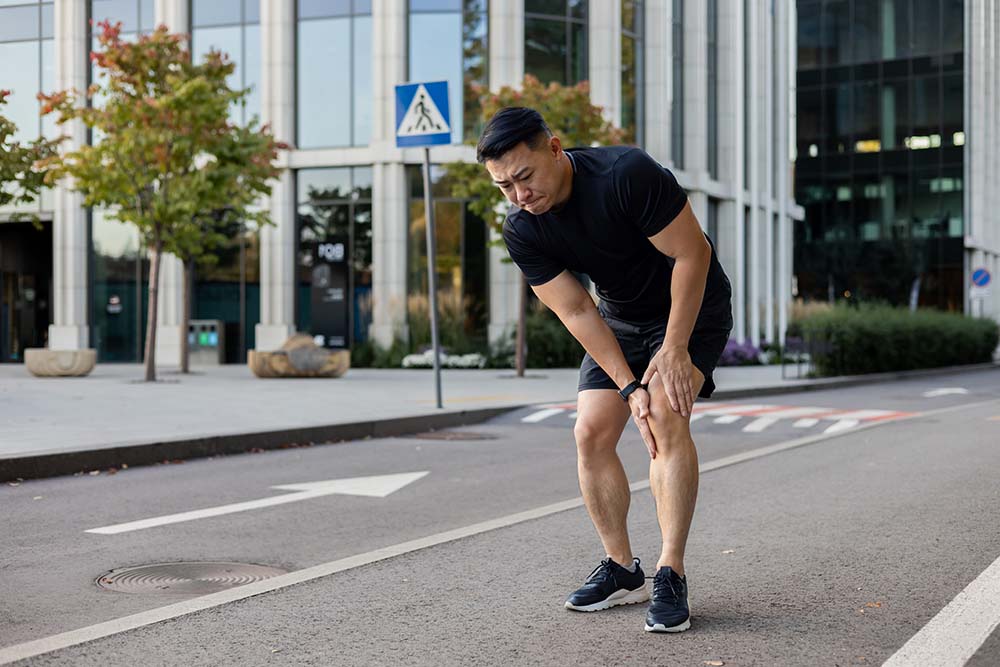
Repeated load from running, court sports, strength training, or long periods on the feet places continual pressure on the joint surfaces, tendons, and supporting structures. When the load exceeds the tissue’s ability to recover, the knee begins to react with aching, stiffness, or irritation during familiar activities. These changes often build gradually and reflect how the joint is managing daily and sporting demands.
Understanding what is happening inside the knee begins with a focused assessment of how the joint moves and responds during activity. Here in Singapore, a range of diagnostic options helps the specialist select the best method for identifying the structure involved, allowing the evaluation to move from initial observation to clearer confirmation.
The specialist begins by observing how the knee behaves during walking, bending, and weight bearing, followed by focused tests that assess the ligaments, meniscus, cartilage surfaces, and surrounding soft tissues. This information is combined with a review of when the symptoms began and how they change with activity, helping to narrow down the structures most likely contributing to the pain. These include:
Imaging studies provide further detail by showing changes that are not visible from the outside. X-ray imaging evaluates bone alignment and helps detect fractures or early narrowing between joint surfaces. Magnetic Resonance Imaging (MRI) offers detailed views of the meniscus, ligaments, tendons, and cartilage, making it especially valuable when soft tissue or cartilage injury is suspected. Computed Tomography (CT) scanning is used when complex bone injuries require a more precise three-dimensional view.
Laboratory testing is used when inflammation or infection is being considered. Blood tests can indicate systemic inflammatory activity, while joint fluid analysis distinguishes crystal related conditions from infection. These findings help determine whether the symptoms are coming from within the joint lining or are the result of a mechanical issue elsewhere in the knee.
With the source of your symptoms now clearer, the next step is identifying the condition responsible for how the joint feels and moves. At Oxford Cartilage & Sports Centre, Dr Francis Wong manages a wide spectrum of knee concerns, with particular focus on cartilage repair, regeneration, joint preservation, and sports related injuries. These are the conditions routinely treated within our specialist practice.
ACL injuries commonly occur during pivoting or sudden directional changes and often leave the knee feeling unstable.
Cartilage defects might result from impact, overload, or early degeneration and often lead to localised aching or stiffness of the knee.
High energy injuries involving the bone around the knee require careful reconstruction to restore alignment and joint function.
Alignment issues can place uneven load across the knee, contributing to discomfort and progressive joint changes.
Inflamed bursae around the knee cause tenderness and swelling, especially after prolonged kneeling or repeated pressure.
Meniscus injuries arise from twisting forces or gradual wear and might create catching or deeper knee joint pain.
Progressive wear of the knee’s cartilage surface leads to stiffness, swelling, and discomfort during everyday movement.
A displaced kneecap causes sudden pain and swelling, and without targeted stabilisation, it carries a higher likelihood of recurring.
Inflammation within the joint lining produces warmth, swelling, and persistent discomfort that requires ongoing management.

Knee pain that settles after a short period of rest is common, but there are situations where the joint begins to signal that it’s no longer adapting well to load or movement. These include:
When these signs appear, it suggests that the knee is dealing with more than simple irritation. As the symptoms persist, they often point toward changes within the cartilage, meniscus, ligaments, or surrounding soft tissues. Because these issues can progress over time, an early specialist review becomes important to clarify what the joint is reacting to and to guide treatment that best addresses the underlying cause rather than the symptoms alone.
Knee pain often feels nonspecific at first, especially when symptoms shift between aching, stiffness, and moments of instability. This is why clarifying the diagnosis is essential before deciding how to manage the joint. In consultation, Dr Francis Wong examines how the knee behaves under load, reviews imaging in detail, and explains how the cartilage, meniscus, ligaments, or alignment contribute to the way the joint feels during daily activity and sport.
Once the underlying issue is clear, treatment discussions focus on restoring confident movement while preserving long term joint health. This can involve targeted rehabilitation, load strategies, biologic or regenerative options, or arthroscopic solutions when required, always guided by the principles of cartilage preservation and the demands of daily and sporting activity. To speak to our specialist, please contact the clinic to arrange for a consultation.

Avoid movements that make your knee feel worse during or after activity. Deep bending, jumping, rapid turns, and prolonged kneeling often place extra load on irritated tissues. If you notice increasing ache, swelling, or a sense that the knee is not fully steady after certain actions, ease off until a specialist can review the joint.
Knee pain becomes concerning when it lingers for weeks, when the knee is always swollen, when it gives way, or when you cannot fully straighten or bend it. Pain after a twist, fall, or pivot also needs attention. These signs suggest the joint is dealing with more than simple irritation and should be assessed early.
Some knee pain develops gradually without a single incident. This often reflects repeated load on the cartilage, meniscus, or tendons during daily movement or sport. Stiffness after sitting, swelling after activity, or aching on stairs are common examples. Even without a clear injury, these signs suggest the tissues are struggling to keep up with demand and warrant a proper review from a specialist.
Knee pain often arises when these factors interact over time. Age reduces how well cartilage and supporting tissues tolerate load. Higher activity levels increase repeated stress during sport and daily movement. Alignment differences can shift pressure toward specific areas, making those tissues work harder than intended. When these influences combine, the knee becomes more reactive and discomfort tends to manifest more easily.
An MRI helps when symptoms hint at deeper tissue injury, such as ongoing pain, locking episodes, or instability during movement. It shows cartilage, meniscus, and ligament changes that X-rays cannot detect. While you won’t need an MRI for every knee issue, it becomes important when the examination does not fully explain the symptoms.
Some knee pain settles with reduced load, activity modification, and early strengthening, especially when the irritation is mild. However, symptoms that return repeatedly, limit movement, or come with swelling or mechanical signs often need targeted treatment. Understanding what the joint is reacting to helps determine whether recovery is likely with simple measures or whether deeper issues need attention.
Surgery is considered when there is a definite structural injury such as an ACL tear, significant meniscus damage, an unstable cartilage defect, fractures that affect alignment, or repeated kneecap dislocations. It also becomes an option when well guided rehabilitation and load management no longer improve symptoms that restrict daily activity or sport, indicating that the joint needs more targeted correction.

By Oxford Orthopaedics